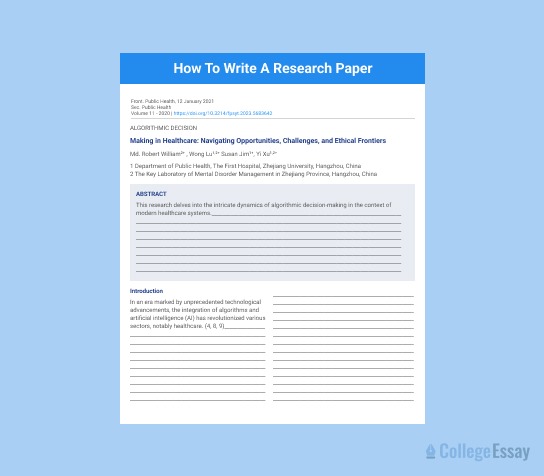
Research Paper Example: 13 Free PDF Samples Across Every Format and Length
The most useful research paper examples for students are free PDF samples organized by format (APA 7, MLA 9, Chicago 17, Harvard), by length (3 to 15 pages), and by subject (science, history, psychology) — so you can download the one closest to your assignment and use it as a working model. This page has 13 such examples, all free to download, no signup required, with a 60-second navigator below that routes you to the right sample based on what your professor assigned.
How to Choose the Right Research Paper Example in Under 60 Seconds?
Research paper examples are most useful when organized by the four variables that define an assignment: format (APA, MLA, Chicago, Harvard), length (3 to 15 pages), subject (science, history, psychology), and academic level (high school, college). A student can then download the sample that matches all four and use it as a structural model. Pick a path below, and you will have a working model open in under a minute. If you also need help with the writing process itself, start with our complete guide on how to write a research paper.
Research Paper Examples by Format
Four research paper formats cover almost every college assignment: APA 7 (psychology, business, social sciences), MLA 9 (English and literature), Chicago 17 (history), and Harvard (common at UK, Australian, and some US graduate programs). If your assignment sheet does not say which one to use, default to APA. It is the most commonly required across US colleges. For the full breakdown, see our complete citation styles guide.
APA Format Research Paper Example (APA 7th Edition)
This sample shows APA 7 applied to a 6-page exploratory psychology study with literature review, methods, results, and references. Title page in the student-paper style, page numbers top right, hanging indent on every reference entry. For the full set of APA 7 rules, see our complete APA format guide.
MLA 9 Research Paper Example (MLA 9th Edition)
This sample shows MLA 9 applied to a 3-page literary analysis of Conrad’s Heart of Darkness, with parenthetical citations in author-page format and a Works Cited page. Standard MLA header block top left of page 1, last name and page number top right of every page, no separate title page. For the full set of MLA 9 rules, see our complete MLA format guide.
“CollegeEssay.org’s research paper writers review roughly 400 student briefs per month — the four variables that determine which sample actually helps are the format the professor assigned, the required page count, the subject area, and the academic level.”
Chicago 17 Research Paper Example (Chicago 17th Edition)
This sample shows the Chicago 17 notes-bibliography style applied to a 5-page historical argument on the Emancipation Proclamation, with footnotes and a separate bibliography. Title page unnumbered, body page numbers starting on page 1, footnote numbers superscripted in the body. For the full set of Chicago 17 rules, including the difference between notes-bibliography and author-date, see our complete Chicago style guide.
Harvard Research Paper Example
This sample shows Harvard referencing applied to a 4-page economics review on minimum wage research, with author-date in-text citations and a Reference List. Common at UK and Australian universities and at some US graduate programs. For the full set of Harvard rules, see our complete Harvard referencing guide.
If you are working under a deadline and would rather skip straight to a finished paper that matches your assignment exactly, a research paper writing company can build the whole thing — formatted in your required style, the right length, with sources cited correctly — in 24 hours. Otherwise, the field-specific examples below are organized by subject.
Research Paper Examples by Subject
A research paper in science, history, or psychology each follows the same overall structure but differs in section conventions: science papers use IMRaD (introduction, methods, results, and discussion) with an abstract, history papers build a thesis-driven argument with primary and secondary sources in footnotes, and psychology papers follow APA with literature review and methods sections.
Science Research Paper Example
This 6-page IMRaD paper on coral bleaching includes an abstract, methods, results, and discussion sections, written in APA format. If you want to model the methods section specifically, see our research paper methods section guide.
History Research Paper Example
This 5-page Chicago paper argues an interpretation of Lincoln’s strategic reasoning behind the 1863 Emancipation Proclamation, with primary and secondary sources cited in footnotes. If you have not picked a topic yet, start with our list of history research paper topics.
Psychology Research Paper Example
This 6-page APA paper investigates the relationship between short-form video consumption and sustained attention in undergraduates, with the full IMRaD structure. For topic ideas, see our list of psychology research paper topics.
Research Paper Examples by Length
Research paper length runs from 3-page intro-course assignments to 15-page capstones, with 5 to 8 pages being the most common college requirement. Pick the sample closest to your required page count and treat its source-count, section-count, and depth as the model for your draft.
Short Research Paper Example (3 to 4 Pages)
This 4-page paper covers one focused argument on AI in the writing classroom with three sources, typical of first-year intro-course assignments. One-paragraph introduction, two body paragraphs, one-paragraph conclusion.
Standard Research Paper Example (5 to 8 Pages)
This 5-page MLA paper on Conrad’s Heart of Darkness expands to multiple body sections with a counter-argument and four sources, the most common college assignment length.
10 Page Research Paper Example
This 10-page APA paper on screen time and attention adds a literature review, a theoretical framework section, and a measurement validation discussion, typical of upper-division coursework. Plan on 8 to 12 sources for a paper at this length.
Long-Form Research Paper Example (12 to 15 Pages)
This 12-page capstone-style APA paper includes an abstract, full literature review, theoretical framework, methodology, results, discussion, limitations, future directions, and conclusion. Plan on 15 or more sources at this length.
Research Paper Examples by Academic Level
The difference between a college research paper example and a high school one is scope, source count, and analytical depth: high school papers run 3 to 5 pages with 3 to 5 sources and a clear thesis-evidence-conclusion structure, while college papers run 5 to 10 pages with 8 to 15 sources and require synthesis across sources rather than summary of any one of them.
Research Paper Example for College Students
This 5-page MLA paper demonstrates the level of original analysis expected at the college level: synthesis across sources rather than summary of any one of them, with the writer’s interpretation in the foreground. Most college research papers run 5 to 10 pages and use APA or MLA format. Across the college-level briefs CollegeEssay.org’s research paper writers handle, the most common combination is 5 to 8 pages in APA or MLA — the standard sample below matches that profile.
Research Paper Example for High School Students
This 3-page MLA paper on teen social media demonstrates the simpler scope and source-count typical at the high school level: focused thesis, three sources, foundational structure. Most high school research papers run 3 to 5 pages and use MLA format.
Research Paper Section Examples: Introduction, Thesis, Methods, Results, Conclusion
A research paper has five sections that each follow their own structural rules: the introduction sets context and lands the thesis, the methods section explains how empirical work was conducted, the results section presents findings, and the conclusion returns to the thesis with what the paper has earned. Each one is worth studying as its own structural unit. If you are stuck on one specific section, the targeted guides below will help more than reading another full sample paper.
-
The Introduction The opening hook, the context paragraph, and the thesis statement are all moves you can study individually.
-
The Thesis Statement A weak thesis is the single most common reason a research paper falls apart.
-
The Outline Before drafting any section, the structure should be locked.
-
The Methods Section Documents your procedure and materials — see research paper method section examples on how it's written.
-
The Results Section (for empirical papers).
-
The Conclusion A strong conclusion does more than restate the thesis verbatim. It returns to the thesis with whatever the paper has earned along the way.
Research Paper Components: Proposals, Abstracts, Literature Reviews
A research proposal, an abstract, and a literature review are the three most commonly assigned research paper components. Each is sometimes assigned as a standalone piece, and each appears as a section inside a longer research paper. Below is a one-line orientation for each, with the full guide linked for the one that matches your assignment.
-
Research Proposal A research proposal explains what you intend to study, why it matters, and how you will study it; typical length is 1 to 5 pages depending on the assignment. For the full structure, prompts, and a downloadable proposal example, see our complete guide.
-
Abstract A 150-to-250-word summary stating the purpose, method, key findings, and conclusion. APA papers commonly require one, most undergraduate MLA papers do not. For format-specific rules, see research paper abstract examples.
-
Literature Review A literature review synthesizes existing research on your topic by grouping sources into themes and explaining where your paper fits in. It is not a summary of sources one at a time. Length runs from 2 to 3 pages as a section of a longer paper, up to 15 or more as a standalone assignment. For the full structure, synthesis method, and a literature review example, see our guide page.
You now have a working model: same format your professor wants, roughly the length your assignment calls for, in your subject area. The harder part starts when you sit down to write yours: finding sources that are not already cited everywhere, structuring an argument that holds up across 8 to 10 pages, and threading citations cleanly through every paragraph without breaking the flow. If the writing is the part you would rather not do, our CollegeEssay.org team of research paper writers handles the entire paper end to end: topic-locked, formatted in APA, MLA, Chicago, or Harvard, sourced, and delivered within your deadline window.
What are the Common Mistakes these Research Examples Avoiding?
The four most common mistakes in student research papers are patchwriting, quote-stuffing, floating citations, and concluding by restating the thesis verbatim; each is avoided in the samples on this page.
- Patchwriting. This is paraphrasing that sticks too close to the original wording, swapping in synonyms but keeping the sentence structure. It still counts as plagiarism. The fix is to read the source, close it, write the idea in your own words from memory, and then add the citation.
- Quote stuffing. Building paragraphs around long quotes from sources, with your own voice reduced to a connector between them. Aim for paraphrasing as the default and direct quotation only when the original wording matters.
- Floating citations. A parenthetical citation at the end of a sentence with no signal that the source is being used. Better: introduce the source by author or by their argument before the citation lands.
- The five-paragraph essay carry-over. High school five-paragraph structure does not scale to college research papers. A college research paper has multi-paragraph sections, not single-paragraph body points.
- Concluding by restating the thesis verbatim. The conclusion should return to the thesis with whatever the paper has earned along the way. A reader who skips straight to the conclusion should learn something they could not have learned from the introduction alone.
How to Use These Research Paper Examples?
Read the example that matches your assignment all the way through once before drafting your own. As you read, mark four things: where the thesis lands (usually the last sentence of the introduction), how each source is introduced before the citation (the pattern is claim, evidence, citation, interpretation), how transitions link sections rather than jumping between them, and how the conclusion returns to the thesis rather than just restating it.
Every example above is downloadable as a free PDF. None require an account.
- If your professor gave you a page count, jump straight to a sample at that length:
- 3 to 4 pages: Short Research Paper Sample (PDF). Best for first-year intro courses.
- 5 to 8 pages: Standard Research Paper Sample (PDF). Most common assignment length.
- 10 pages: 10-Page Research Paper Sample (PDF). Typical for upper-division coursework.
- 12 to 15 pages: Long-Form Research Paper Sample (PDF). Capstone, senior seminar, honors.
If your professor gave you a word count instead, the rough conversion is 250 words per double-spaced page. A 5-page paper is around 1,250 words. A 10-page paper is around 2,500 words.
You have got working examples now, across formats, levels, lengths, and subjects, and a clear sense of what a finished research paper actually looks like. The work that is left is yours: pick your topic, pull your sources, and start drafting. If you would rather skip the writing and get straight to a polished paper, send us your assignment sheet (topic, length, format, deadline, and any specific source requirements), and we will have a research paper writer build it from scratch. Most papers come back inside 24 to 48 hours, fully formatted and ready to submit.
Frequently Asked Questions
Get expert writing help.
- Expert writers in your subject
- 100% human-written work
- From $11 per page
Price shown before checkout.
A research paper, written for your topic.
Tell us your topic, format, and length. We deliver a complete research paper in under 24 hours.
get research paper written