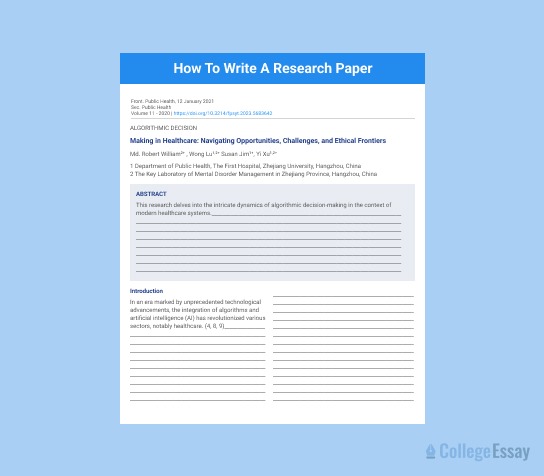
What Is a Case Study?
A case study is a research method that examines one specific subject in close detail rather than measuring patterns across a large group.
The subject can be a person, a company, a community, a historical event, or a problem: anything that can be studied as a single, bounded example.
The defining feature of a case study is depth over breadth. Instead of asking "what happens generally?", it asks "what happened here, and why?" That focus makes it one of the most useful tools in fields like psychology, business, education, social work, and public health, where real-world complexity matters more than statistical averages.
- Exploring problems that are too complex or context-dependent for a survey
- Documenting how a strategy, treatment, or decision played out in practice
- Teaching through real examples, including the Harvard Business School model
- Providing evidence for a recommendation or policy proposal
What Are the Parts of a Case Study?
A standard academic case study has six core parts: an introduction, a background section, a methodology section, a findings or analysis section, a conclusion, and a reference list. Each part does a specific job.
Introduction
Establishes the subject, states the research question or problem, and explains why this case is worth examining. The introduction does not need to be long: two to four paragraphs that give the reader enough context to follow the analysis.
Background
Provides the history and context of the case. Who is involved? What happened before the situation under analysis? What are the conditions that made the problem or outcome possible? This section answers "what is the situation?" before the analysis addresses "why did this happen?"
Methodology
Explains how data was gathered. In academic case studies, this typically means interviews, observations, documents, or published records. Stating your method matters because it tells the reader how much weight to give your findings.
Findings and analysis
The core of the case study. This section presents what you discovered and, more importantly, what it means. A findings section that only lists facts without interpretation is incomplete. The analysis must connect the evidence to the research question.
Conclusion
Summarizes what the case demonstrates and identifies lessons that apply beyond this specific instance. A strong conclusion does not simply restate the findings; it answers the question: so what does this mean?
References
All sources cited in the study are formatted in the citation style your course or institution requires (APA, MLA, Chicago, or Harvard).
How Do You Write a Case Study Step by Step?
The eight steps to writing a case study start with identifying a well-documented case and setting a clear research question before gathering any data. Skipping steps, particularly the analysis step, is the most common reason case studies get returned for revision.
1Identify the Case
Choose a subject that fits the assignment's topic and has enough documented information to support real analysis. Vague or underdocumented subjects produce thin case studies regardless of writing quality.
2Set a Clear Objective
Decide what question the case study will answer before you start collecting data. The objective shapes every other decision: what to research, what to include, and how to structure the analysis.
3Gather Data
Use a mix of primary sources (interviews, direct observation, firsthand documents) and secondary sources (published studies, news records, organizational reports). Collect more than you think you need. You will cut material during drafting.
4Describe the Case
Write the background section covering who was involved, what happened, when, and under what conditions. Stick to documented facts at this stage. Interpretation belongs in the analysis.
5Analyze the Case
Identify the root causes, key decisions, and outcomes. Explain why things happened the way they did. This step requires using course concepts, frameworks, or theories to make sense of the facts, not just summarizing them.
6Develop Conclusions and Recommendations
Based on your analysis, what should a reader take away? If the case involves a problem, what would have produced a better outcome? If it involves a success, what made it work and can it be replicated?
7Format and Organize
Structure the study using the six-part framework above. Add headings, ensure each section transitions logically into the next, and follow any formatting requirements from your assignment sheet.
8Edit and Finalize
Check that your argument holds together from the research question through the conclusion. Remove anything that does not serve the analysis. Proofread for clarity and citation accuracy before submitting.
If the steps make sense but the actual assignment (the subject, the analysis, the writing) still feels like too much to untangle on your own, that is a different problem. Students who need a finished case study, not just a guide to follow, can pay someone to write my case study and receive a complete draft built around their specific subject, requirements, and deadline.
What Is the Standard Case Study Format?
The standard case study format uses a six-section structure with clear headings, double spacing, and the citation style specified by your instructor. Most academic case studies follow APA 7 by default unless another style is required.
The format decisions that trip up most students are heading hierarchy (when to use H2 vs. H3), citation formatting inside tables, and how to label appendices. The format guide covers each of these with examples.
What Does a Case Study Look Like?
The analysis section is the part most students underwrite.
Here is a strong example of what it should look like in practice:
The school's dropout rate increased by 14 percent in the year following the switch to remote instruction, rising from 6 percent to 20 percent. Interviews with teachers and counselors identified a consistent pattern: students who had previously relied on in-person check-ins to manage attendance and engagement lost that accountability structure entirely when classes moved online. The data suggests the school's existing support systems were built around physical presence and could not be replicated digitally without significant redesign.
Notice what this paragraph does: it states a specific finding (14 percent increase), provides a mechanism (loss of accountability structure), and connects the evidence to an implication (existing systems were presence-dependent). That is the level of analysis a case study requires.
For complete examples across different subject areas and case types, the case study examples page has annotated samples you can use as models.
What Are the Different Types of Case Studies?
Six types of case studies cover most academic assignments. Knowing which type applies to your assignment tells you what the analysis should accomplish.
- Documents a situation in detail without attempting to change or influence it. Used to provide a rich picture of how something works in its natural setting. Common in social science and education research.
- Conducted on a topic where little prior research exists, often as a preliminary step before a larger study. The goal is to generate research questions and hypotheses, not to reach conclusions.
- Investigates cause-and-effect relationships. Used when you need to explain why something happened, not just describe what happened. Most business and policy case studies fall into this category.
- Presents a real problem and analyzes the strategies used to address it, or proposes strategies that should have been used. Common in business school and healthcare education.
- Examines several cases simultaneously to identify shared patterns or differences across instances. More complex to execute than single-case studies but produces more generalizable findings.
- Conducted when the case itself is inherently interesting, not because it represents a broader pattern. A rare medical case or a historically unique event might be studied intrinsically.
Common Mistakes to Avoid in a Case Study
The analysis section is where most case studies fail because students describe what happened instead of explaining why it happened. Most case study revisions come back for the same handful of errors. Fixing these before you submit is faster than fixing them after feedback.
The most common problem. Describing what happened is not analysis; analysis explains why it happened and what it means. If your analysis section could be replaced by a Wikipedia summary of the case, it needs more interpretive work. CollegeEssay.org sees this mistake repeatedly in student submissions: the analysis section restates findings instead of connecting them to the research question.
A case study is only as strong as its evidence base. If you cannot find primary sources, firsthand accounts, or detailed records, the analysis will be thin regardless of how well you write.
A descriptive case study that tries to prove causation, or an explanatory study that only documents facts, will fail the assignment's analytical standard. Confirm which type your instructor expects before you start.
The research question should be clearly stated in the introduction and answered directly in the conclusion. If a reader has to infer what question the study is addressing, the structure is broken.
Even in undergraduate case studies, explaining how you gathered information matters. Stating "I reviewed three peer-reviewed articles and conducted two interviews" is enough. The absence of any methodology statement is the problem.
A conclusion that only restates the findings, such as "As shown above, the case demonstrates X," wastes the most valuable real estate in the study. The conclusion is where you answer "so what?" and identify implications beyond this specific case.
You now know what a case study is, how to structure every section, which type fits your assignment, the mistakes to avoid, and how to frame conclusions appropriately. The harder part for most students is putting all of that into a finished, coherent document under a real deadline. If your submission date is approaching and the analysis section is still blank, write my case study can help you. You will receive a fully analyzed draft within 24 hours, built around your specific subject and course requirements.
Tips for Writing a Strong Case Study
The highest-scoring case studies separate description from interpretation by writing the background section first without any analytical language, then writing the analysis as a completely separate section. The difference between a case study that passes and one that earns a strong grade usually comes down to a few specific habits.
1Lock the Research Question Before You Gather Data
Collecting information without a clear question produces unfocused notes that are hard to use. A specific question like "What organizational factors contributed to the company's 2019 supply chain failure?" tells you exactly what evidence to look for. CollegeEssay.org's case study guides find that students who lock the research question before gathering any data produce more focused analysis.
2Use Direct Quotes Sparingly and Purposefully
A quoted passage from an interview or document carries more weight than a paraphrase, but only if it is the most efficient way to present that specific evidence. Do not quote to fill space.
3Separate Description from Interpretation in Your Draft
Write the background section first without any interpretive language. Then write the analysis separately. Mixing them produces sections that are neither fully descriptive nor fully analytical.
CollegeEssay.org's writing team reviews hundreds of student case studies annually and finds that the most improved papers are those where students complete the background section entirely before touching the analysis.
4Apply a Framework
Most academic disciplines have standard analytical frameworks that case studies are expected to use: SWOT analysis in business, ecological systems theory in social work, and diagnostic criteria in psychology. Using the framework your course has covered signals that you understand the material and are applying it, not just describing a situation.
5State Implications in the Conclusion, not Just Lessons
"This case shows that remote accountability systems need redesign" is a lesson. "Organizations planning hybrid or remote transitions should audit their existing support structures before the switch, not after" is an implication. The second is more useful.
What Are the Pros and Cons of Case Studies as a Research Method?
Case studies are powerful for certain research goals and poorly suited to others. Understanding the trade-offs helps you position your own study's conclusions appropriately.
- Produces detailed, context-rich findings that surveys and experiments cannot
- Captures how things work in real-world conditions, not controlled environments
- Flexible enough to incorporate multiple data types (interviews, documents, observations)
- Well-suited to exploratory research where hypotheses do not yet exist
- Produces findings that practitioners can apply directly to similar situations
- Findings are not statistically generalizable: what is true in one case may not be true in general
- Vulnerable to researcher bias in selecting and interpreting evidence
- Time-consuming to conduct rigorously
- Results depend heavily on data quality, which varies by case
- Difficult to replicate precisely, which limits verification of findings
For academic assignments, the cons matter mainly in how you frame your conclusions. A case study conclusion should say "this case suggests" or "this evidence indicates" rather than "this proves." The single-case design does not support universal claims.
You have the definition, the structure, the step-by-step process, and the format. What most students find is that the actual writing, taking research on a specific subject, and turning it into a rigorous, well-argued analysis, takes significantly more time than the assignment timeline allows.
If your case study is due soon and you need a finished draft, not a template, CollegeEssay.org can write your case study to your exact subject, citation style, and page count, delivered before your deadline.
Frequently Asked Questions

-16768.png)